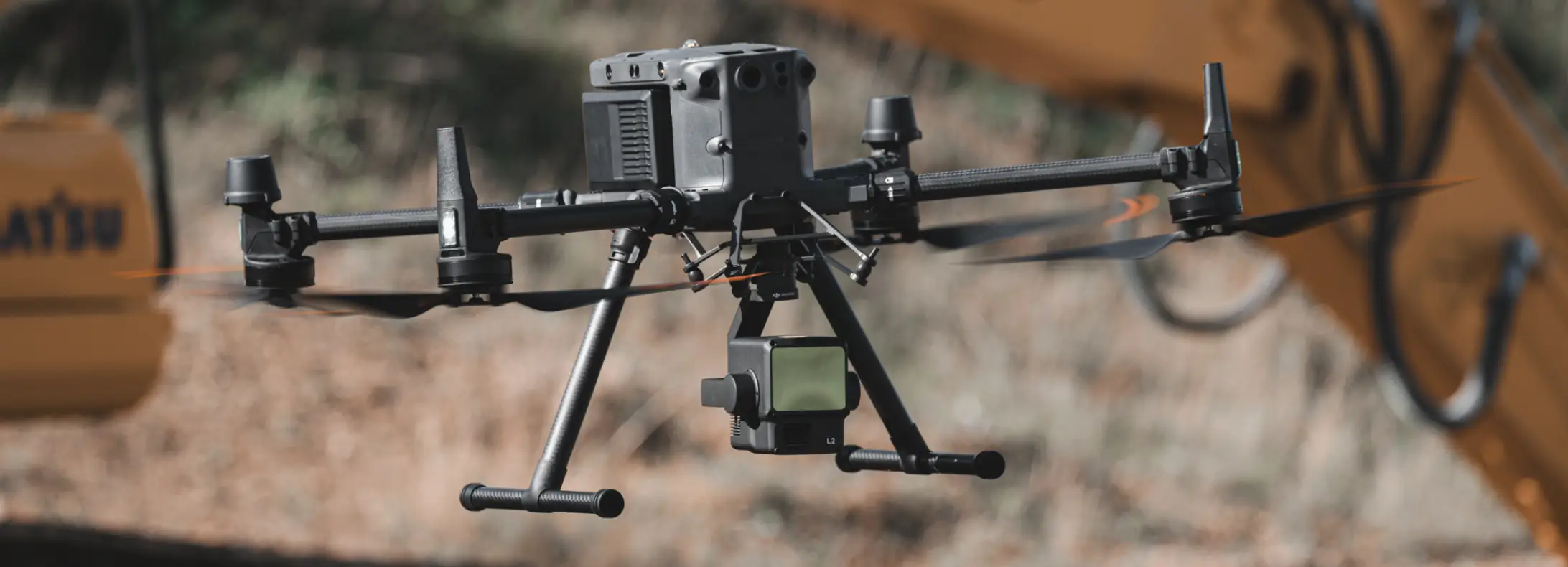
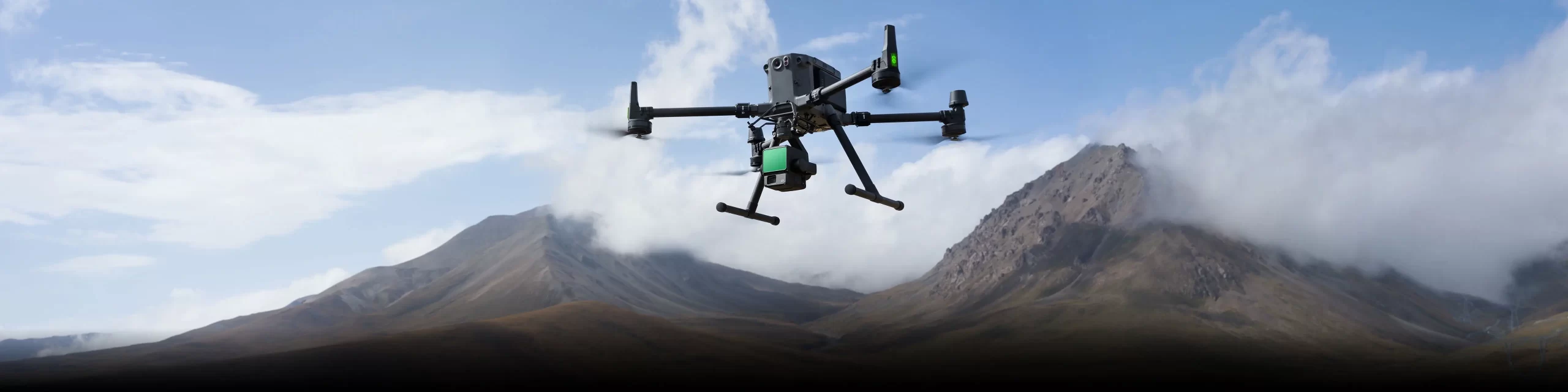
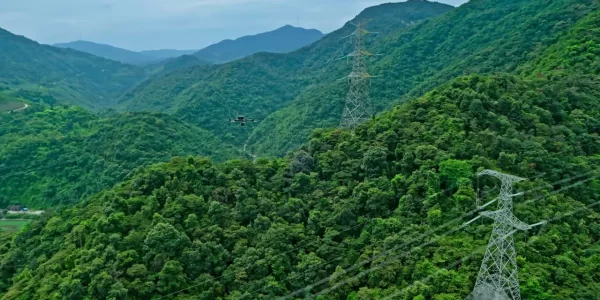
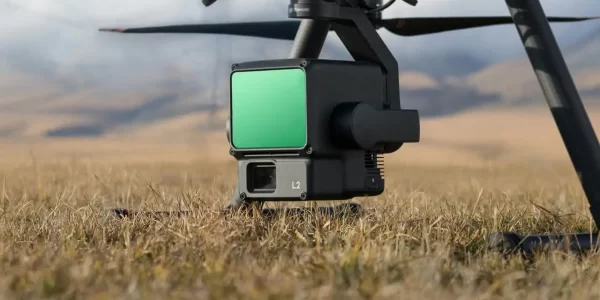
Zenmuse L2 detects targets up to 250 m at 10% reflectivity (100 klx) and up to 450 m at 50% reflectivity (0 klx). The increased operational altitude of up to 120 m significantly improves efficiency and flight safety.
Vertical Accuracy: 4 cm;
Horizontal Accuracy: 5 cm
2.5 km2 covered in a single flight
Smaller laser spots,
denser point clouds
250m @10% reflectivity, 100klx
450m @50% reflectivity, 0klx
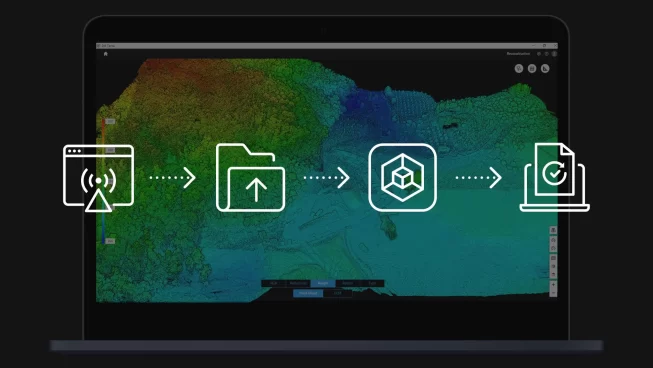
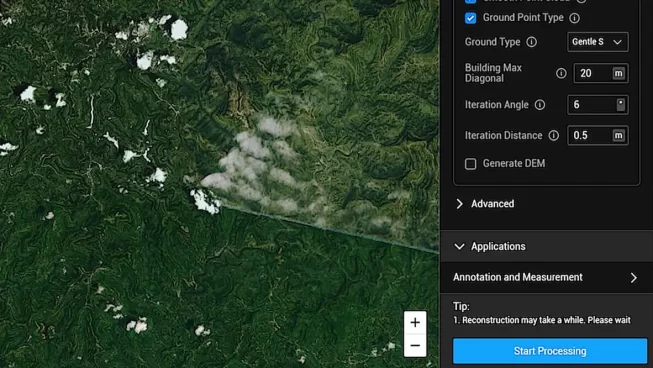
Powered by advanced hardware, Zenmuse L2 delivers precise scanning of complex environments with extended range and faster point-cloud acquisition. Users can preview, review, and process data on-site, while DJI Terra generates Task Quality Reports and enables streamlined, one-stop post-processing for high-precision results.
By combining GNSS and a high-accuracy self-developed IMU, this solution achieves 4cm vertical accuracy and 5cm horizontal accuracy.
Zenmuse L2 detects targets up to 250 m at 10% reflectivity (100 klx) and up to 450 m at 50% reflectivity (0 klx). The increased operational altitude of up to 120 m significantly improves efficiency and flight safety.
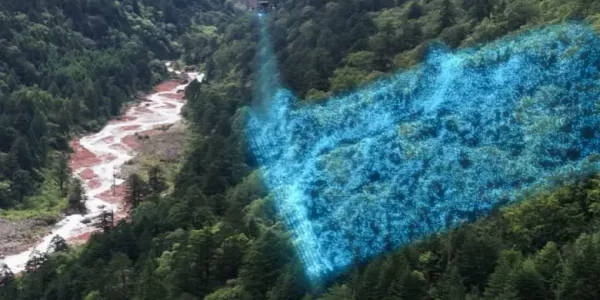
With a reduced laser spot size of 4 × 12 cm at 100 m—just one-fifth the size of L1—Zenmuse L2 captures finer details, penetrates dense vegetation more effectively, and delivers more accurate digital elevation models (DEM).
In densely vegetated areas, L2 can capture more ground points beneath the foliage.
In both single- and multiple-return modes, Zenmuse L2 delivers up to 240,000 points per second, enabling faster data capture and denser point clouds within the same flight time.
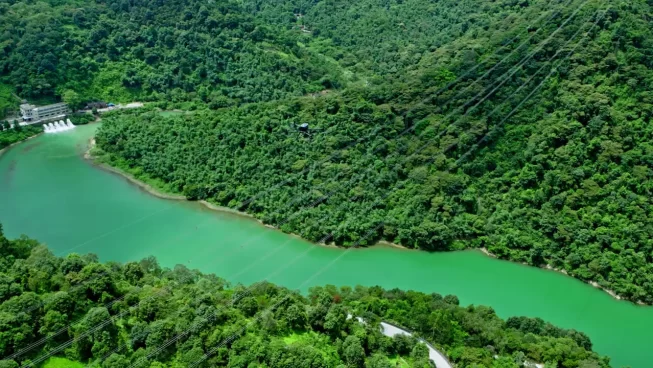
Zenmuse L2 supports two scanning modes to adapt to different mission requirements. Repetitive scanning delivers more uniform, high-accuracy point clouds for precision mapping, while non-repetitive scanning enables deeper penetration to capture richer structural details—ideal for power line inspection, forestry surveys, and complex environments.
The frame-based design delivers up to 100% effective point cloud utilization. Combined with a three-axis gimbal, it expands operational flexibility and enables more advanced surveying scenarios.
Zenmuse V1 can get as loud as 127 decibels at 1 meter, which is about the same volume as a jet taking off. Strong volume makes sure that information is clear. It can effectively broadcast up to 500 meters away, so it can cover even large spaces.
The high-accuracy self-developed IMU system, combined with the drone’s RTK positioning system for data fusion during post-processing, gives L2 access to highly accurate absolute position, speed, and attitude information. In addition, the IMU system’s enhanced environmental adaptability improves the operational reliability and precision of L2.
The enhanced IMU system is ready for operation immediately upon power-on, eliminating traditional warm-up time. Once RTK reaches FIX status, the aircraft can begin missions right away, enabling faster deployment and a more efficient in-field workflow.
Featuring an upgraded 4/3 CMOS sensor, pixel size is increased to 3.3 μm with 20 MP effective resolution, delivering noticeably improved image quality and richer true-color point cloud detail. The minimum photo interval is reduced to 0.7 seconds, enabling faster data capture.
The mechanical shutter is rated for up to 200,000 actuations, helping lower long-term operational costs. When point cloud collection is not required, the RGB camera can also be used for photo, video, or visible-light mapping tasks, providing added operational flexibility.

Supports Waypoint, Area, and Linear Route types, for handling surveying tasks in a variety of environments.
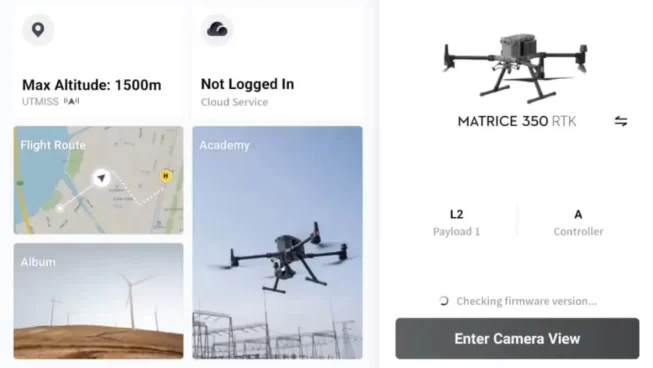
During operation, DJI Pilot 2 supports three display modes – RGB, point cloud, and point cloud/RGB side-by-side display, presenting operational results in an intuitive way. Activating RNG (Laser Rangefinder) enables access to the distance information between the LiDAR module and the object in the center of the FOV, enhancing flight safety. It also supports four real-time point cloud coloring modes – Reflectivity, Height, Distance, and RGB.